

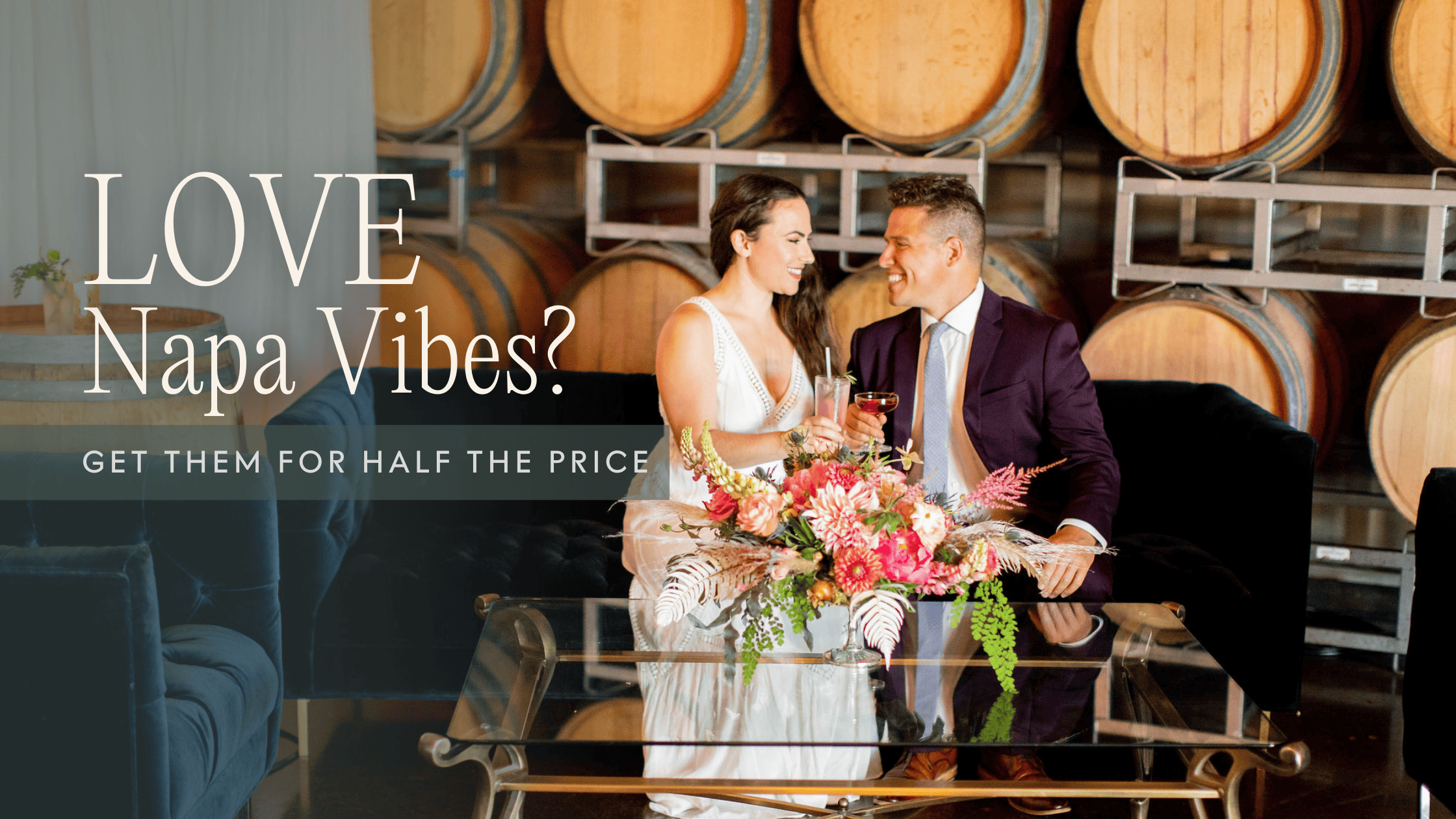
Love Napa vibes? Get them for half the price—without the drive, the wait, or the sticker shock.
There’s something undeniably romantic about the idea of a Napa Valley wedding. Rolling vineyards, golden hour light filtering through grapevines, clinking glasses of world-class wine as you celebrate with your closest friends and family. It’s the dream that launches a thousand Pinterest boards.
But here’s what the glossy wedding magazines don’t tell you: that dream comes with a price tag that can derail even the most generous wedding budget. And increasingly, savvy couples are discovering that the Napa wedding they’ve been fantasizing about isn’t actually in Napa at all—it’s closer to home, more affordable, more available, and just as beautiful.
If you’re planning a wedding and have been assuming Napa Valley is your only option for that wine country aesthetic, it’s time for a deeper dive. Let’s talk about what nobody mentions in those gorgeous venue tour videos.
1. The Napa Price Premium Is Real (And It’s Massive)
Let’s start with the elephant in the vineyard: Napa Valley wedding venues cost approximately twice as much as comparable wine country venues in other Northern California regions. We’re not talking about a modest 10-20% premium for the brand name. We’re talking about venue rental fees that range from $7,000 on the absolute low end to $75,000+ for premium properties, with most falling somewhere between $12,000-$25,000 just for the space.
According to The Knot’s Real Weddings Study, the average cost of a wedding venue in the San Francisco Bay Area already ranks among the highest in the nation. Napa Valley venues consistently price themselves at the top of even that elevated market, banking on the assumption that couples will pay premium rates for the prestigious Napa name.
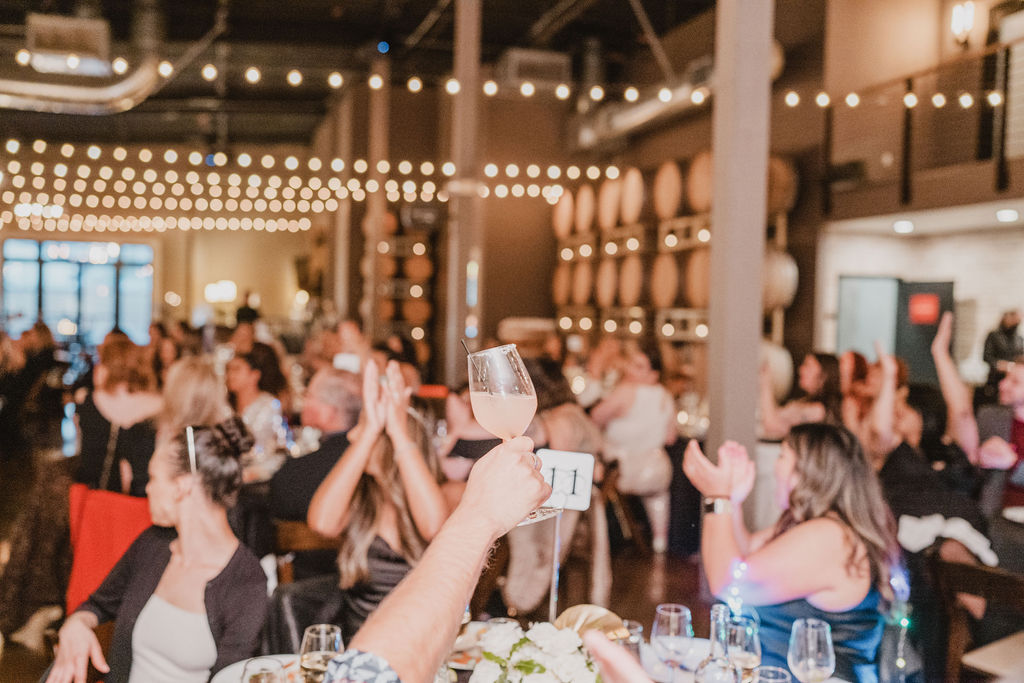
But here’s what’s changed in recent years: It’s not the county line, it’s the aesthetic: barrel rooms, vineyard backdrops, wine-country atmosphere, and that relaxed-yet-refined vibe that makes guests feel like they’ve escaped somewhere special.
And you can get all of that without the Napa price tag.
The Bay Area Alternative
Urban wineries and boutique wine country venues in the San Francisco Peninsula and East Bay offer the same wine country aesthetic at dramatically lower price points. Venue rentals start as low as $3,500 for off-peak days, with many venues like Domenico Winery offering Sunday-through-Tuesday pricing that’s 70% cheaper than weekend rates. That’s not a typo. The same space, the same services, the same vibe—for a fraction of the cost, simply by being flexible about your day of the week.
Let’s do the math on what this means for your actual budget. If you’re looking at a $15,000 venue rental in Napa versus a $5,000 venue rental at a Bay Area urban winery (with 70% off for a Sunday wedding bringing it down to $1,500), you’ve just saved $13,500. That’s an entire honeymoon. That’s upgraded catering for all your guests. That’s professional videography you thought was out of budget. That’s real money that buys real upgrades to your celebration.
The pricing disparity extends beyond just venue rental, too. Napa Valley vendors—photographers, florists, DJs, planners—all charge premium rates because they know couples planning Napa weddings have already committed to elevated budgets. A photographer who charges $3,500 for a Bay Area wedding might quote $5,500+ for the same package in Napa, simply because of the location. Florists increase prices for Napa delivery. Rental companies add surcharges for wine country transport. It all adds up to thousands in additional costs that have nothing to do with service quality and everything to do with geographic markup.
2. Napa’s Vineyard Wedding Restrictions (Yes, Really)
Here’s a surprise that catches many couples off-guard mid-planning: Napa County has some of the most restrictive wedding and event regulations in California wine country. Due to local ordinances designed to protect agricultural operations and manage tourism impact, many Napa Valley wineries cannot host vineyard ceremonies at all. Those dreamy photos of couples exchanging vows with grapevines stretching into the distance? They’re often not actually happening in Napa, or they’re limited to specific properties with special permits that come with—you guessed it—premium pricing.
Napa County’s winery event regulations limit the number of events wineries can host annually, restrict amplified music hours, and impose strict guest count limits. Some properties can only host events in designated buildings, not outdoors among the vines. Others require expensive conditional use permits that get passed on to couples through higher venue fees.
Where You Actually Can Get Married in a Vineyard
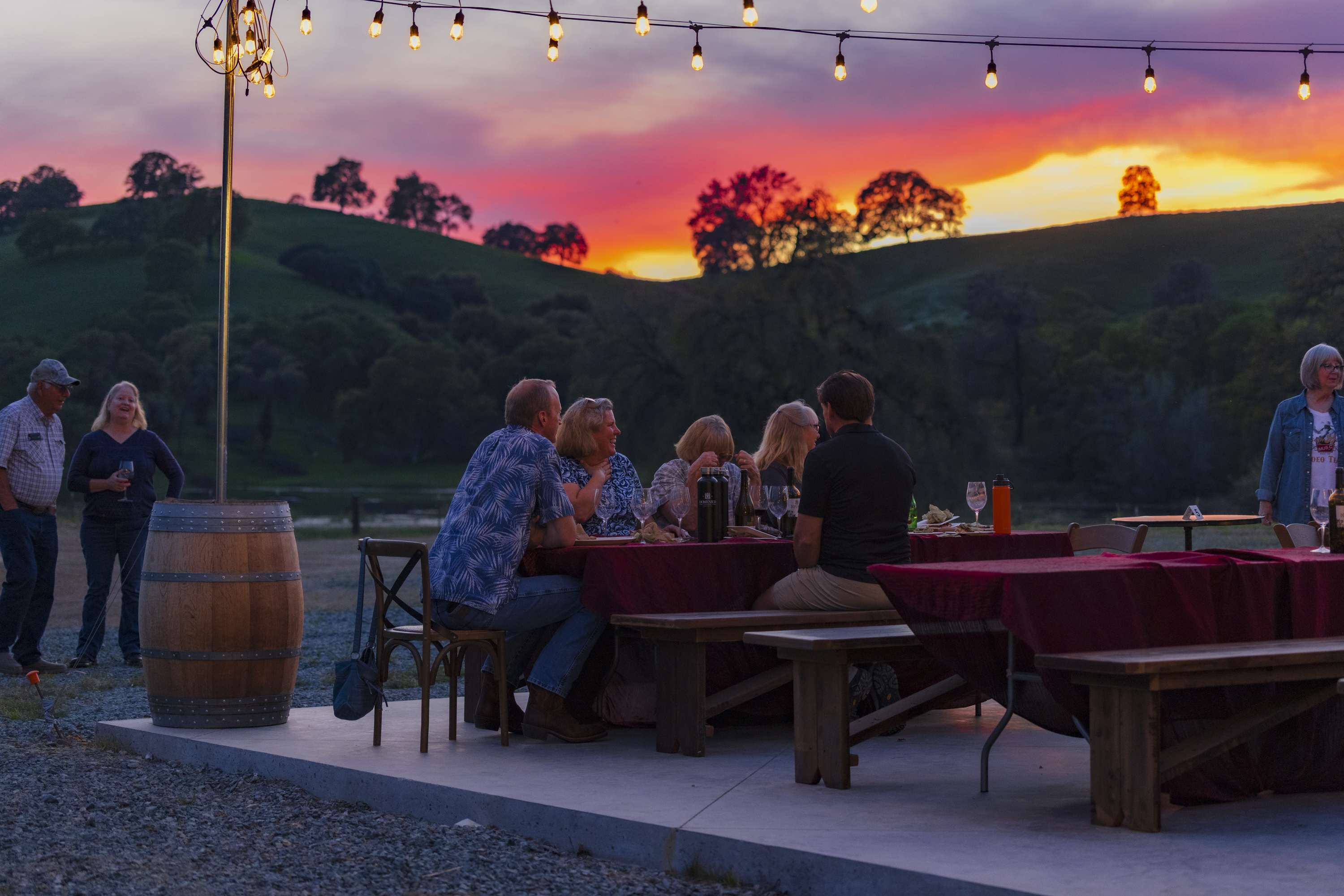
Meanwhile, other California wine regions actively welcome vineyard weddings. Amador County, in the Sierra Foothills, offers stunning vineyard settings with lakeside views, rolling hills, and fewer regulatory restrictions. Livermore Valley, Sonoma (outside of the most touristy areas), and Santa Cruz Mountains all provide vineyard wedding options with more flexibility and lower costs than Napa.
The irony isn’t lost: couples pay Napa premiums hoping for vineyard ceremonies, only to discover they’ll be restricted to indoor venues or small designated outdoor areas. Meanwhile, lesser-known wine regions roll out the actual vineyards without the regulatory hurdles or cost barriers.
3. The Booking Timeline Problem: Years of Waiting vs. Months of Planning
If you’re engaged and hoping to marry within the next 12-18 months, Napa Valley might not even be an option. Premium Napa venues book out 18-24 months in advance for Saturday weddings, with some ultra-desirable properties holding waitlists that extend even further. Fall weekends—the most popular season for wine country weddings—book first, often two years ahead.
This creates multiple problems for couples. First, it forces you to plan your wedding date around venue availability rather than choosing a date that’s meaningful to you. Want to get married on your dating anniversary? Too bad—that Saturday was booked 22 months ago. Hoping for a short engagement for personal or professional reasons? Napa venues can’t accommodate you.
Second, the long booking timelines create pressure to commit before you’re ready. Couples visit a venue, love it, but face the reality that if they don’t put down a deposit immediately, they’ll lose their preferred date. This pressure often leads to hasty decisions and buyer’s remorse when couples later discover they’ve locked themselves into contracts before fully understanding costs or exploring alternatives.
The Boutique Advantage
Local and boutique wineries near metropolitan areas operate on completely different timelines. Because they’re not battling the same demand pressure as branded Napa destinations, they maintain availability much closer to event dates. Many urban wineries and smaller wine country venues have open dates six months out, some even less during off-peak seasons.
This availability creates real advantages beyond just accommodation. It means you can take your time exploring venues without panic-booking. It means you can choose your wedding date based on what matters to you—whether that’s a significant anniversary, a season you love, or a time when important people in your life can attend—rather than settling for whatever’s available. It means if you’re planning a shorter engagement for any reason, you actually have options.
Domenico Winery in San Carlos, for instance, books events across a wide range of timelines. While popular dates fill up (like any quality venue), our multi-space property and flexible event calendar mean couples planning 6-12 months out typically find availability, especially for Sunday through Tuesday weddings that come with significant cost savings anyway.
The psychological benefit of not feeling rushed into venue decisions shouldn’t be underestimated. Wedding planning generates enough stress without the added pressure of artificial scarcity. Working with venues that have reasonable availability means you can make thoughtful choices rather than panicked ones.
Questions to Ask Yourself
Before you commit to a Napa venue (or any venue), ask yourself these questions:
- Are you paying for the experience or the zip code?
- Would your guests notice or care whether you married in Napa versus a beautiful urban winery 30 minutes from their homes?
- Is the Napa venue actually offering vineyard ceremony options, or will you be restricted to indoor/limited outdoor spaces anyway?
- Are you comfortable planning 18-24 months out, or would shorter timelines reduce stress?
- Do you value customization and flexibility, or do you prefer established formats?
- Does a single venue with indoor and outdoor options better serve your needs than separate ceremony and reception locations?
For many couples, honest answers to these questions point away from Napa and toward alternatives that better serve their priorities, budgets, and timelines.
These venues exist throughout Northern California—in the East Bay, on the Peninsula, in lesser-known wine regions, and yes, even in some Napa locations that operate outside the premium-pricing model. The key is knowing they exist and being willing to explore beyond the default assumption that wine country weddings must happen in Napa Venues.